


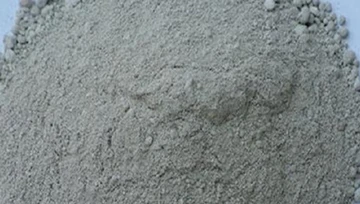
The appearance of calcium magnesium phosphate fertilizer is gray white, black green or brown glassy fine powder, with complex components, mainly Ca3 (PO4) 2, in addition to P2O5, CaO, MgO, SiO2, CaMg and other components. Due to different origins, the product specifications vary greatly. Generally, the P2O5 content ranges from 14% to 20%, the CaO content ranges from 25% to 30%, the MgO content ranges from 10% to 15%, and the SiO2 content ranges from 25% to 40%. From this, it can be seen that calcium magnesium phosphate fertilizer is a multi-component fertilizer mainly containing phosphorus, as well as calcium, magnesium, silicon and other components. Calcium magnesium phosphate fertilizer is insoluble in water, non corrosive, non hygroscopic, and non caking. It is a chemical alkaline fertilizer. It is widely applicable to various crops and acidic soils lacking phosphorus. The specific usage characteristics are as follows:
(1) Suitable for deep application as base fertilizer. After applying calcium magnesium phosphorus fertilizer to the soil, the phosphorus can only be dissolved by weak acids and needs to go through a certain transformation process before it can be used by crops. Therefore, the fertilizer effect is slow and belongs to the category of slow-release fertilizer. Generally, it is necessary to combine deep cultivation and evenly apply fertilizer to the soil, mixing it with the soil layer to facilitate the dissolution of soil acid and the absorption of it by crops.
(2) Mix and compost with 10 times or more high-quality organic fertilizer for more than a month. The composted fertilizer can be used as base fertilizer, seed fertilizer, or for soaking seedlings.
In the use of calcium magnesium phosphate fertilizer, attention should be paid to the following aspects:
(1) The combination application of calcium magnesium phosphate fertilizer with calcium superphosphate and nitrogen fertilizer has a better effect, but it cannot be mixed with them.
(2) Calcium magnesium phosphate fertilizer should not be mixed with acidic fertilizer, otherwise it will reduce the effectiveness of the fertilizer.
(3) The dosage of calcium magnesium phosphate fertilizer should be appropriate, generally controlled at 15-25 per mu
Between kilograms. Excessive application of calcium magnesium phosphate fertilizer not only does not increase the fertilizer efficiency but also leads to a problem of diminishing returns. Usually, when applying 35-40 kilograms of calcium magnesium phosphate fertilizer per mu, it can be applied every other year.
(4) Calcium magnesium phosphate fertilizer is suitable for crops with strong absorption capacity of soluble phosphorus in goji, such as rapeseed, radish, leguminous green manure, leguminous crops, and melons.


