


U.S. soybean farmers face a $1.5 billion problem each year in the form of yield losses from soybean cyst nematode (SCN). Yet proactive soybean cyst nematode control starting at the roots can curb yield damage that occurs much later, when it's too late to act.
When is the best time to scout for soybean cyst nematode symptoms?
Six weeks post-planting is the earliest you should begin scouting for females on the roots of your soybean plants. You can continue scouting until about three to four weeks before harvest.
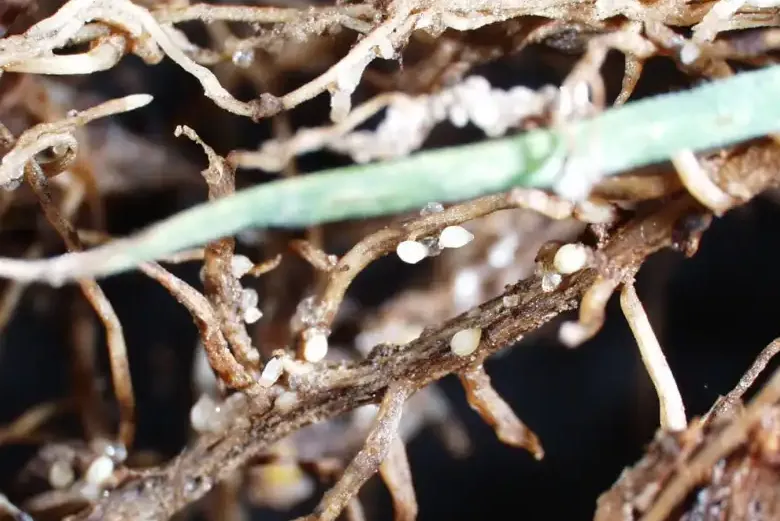
Start early in the season, when soybean roots haven't fully grown into the soil profile. That makes it easier to study roots for possible soybean cyst nematode symptoms.
Where and how to scout for soybean cyst nematode in your fields
Gather a shovel and a magnifying glass before heading to the field. Start with a visual inspection to pinpoint where to dig. Focus on the most likely SCN hiding spots, including:
Field entrances and exits: Machinery tires can introduce SCN-contaminated soil.
Fence lines: Wind blows soil into mounds, which can harbor SCN.
Structures: Soil adjoining barns, equipment and outbuildings can host SCN.
Areas where yields consistently underperform are a prime place to dig for possible soybean cyst nematode damage, too.
Steps for soybean cyst nematode sampling
Once you have located where to dig, take these steps:
1. Use a shovel to carve out a circle of soil around the soybean plant and dig it out. Stay 6" to 8" away from the plant base. Dig 8" deep. Don't tug or pull on the plant.
2. Once the plant is out, shake the soil off. You can also swirl the roots around in water, removing dirt and exposing SCN females on roots.
3. Look at the roots with your magnifying glass. SCN adult females are about the size of a period in a printed sentence and resemble the shape of a lemon. Color varies because females start out white or cream and darken as they mature through the soybean cyst nematode life cycle.
How can I tell the difference between soybean cyst nematode females and root nodules?
It's common to mistake root nodules for SCN adult females. Two key soybean cyst nematode facts make it easier to tell them apart.
Nodules are much larger than SCN females.
Nodules are pink or blood-red on the inside, but SCN females are not.
Soil testing and other soybean cyst nematode management practices
You can also get SCN population data with soil sampling. Samples can be taken anytime during the growing season, but post-harvest is most common. Take soil cores at a depth of 6" to 8", sampling in a zig-zag pattern through your fields and averaging about one core per acre.
Also look into planting soybean cyst nematode-resistant varieties. Because SCN resistance to nematode-resistant varieties is common, work with your trusted adviser to explore effective trait options.


