


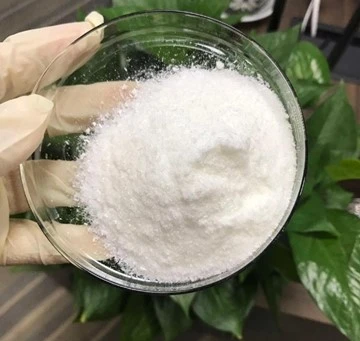
Ammonium sulfate, abbreviated as ammonium sulfate, is an early type of solid nitrogen fertilizer commonly referred to as standard nitrogen fertilizer; Containing 20% to 21% nitrogen. The following are the characteristics, functions, and usage methods of ammonium sulfate compiled by the editor. If you are interested, let's take a look together!
Characteristics and functions of ammonium sulfate
① The pure product is a white crystal, with a slight yellow color when there are a small amount of impurities.
② Good physical properties, no moisture absorption or agglomeration. However, if too much sulfuric acid is added to the manufacturing process or the environmental humidity is high, it will absorb moisture and clump.
③ Easily soluble in water, fertilizer aqueous solution exhibits acidic reactions.
④ Stable chemical properties, non volatile and non decomposing at room temperature and pressure.
⑤ Under alkaline conditions, ammonia volatilization occurs and nitrogen is lost. Therefore, ammonium sulfate cannot be mixed with alkaline substances for storage and application.
⑥ It belongs to physiological acidic fertilizers, and long-term application can enhance soil acidity. The application of ammonium sulfate in acidic soil can enhance the acidity of the soil, so lime should be added, but it should be noted that lime and ammonium sulfate should be applied separately; Calcareous soil contains a large amount of Ca-CO3, and the application of ammonium sulfate has little effect on soil acidity, but it can cause ammonia volatilization loss, so it should be applied deeply.
Method of using ammonium sulfate
① Suitable for use as base fertilizer, topdressing, and seed fertilizer, with good effects as seed fertilizer and topdressing; If used as seed dressing fertilizer, it should be mixed dry and sown as soon as it is mixed; When mixing seeds, they can be mixed with decomposed organic fertilizer in a certain proportion before mixing, to avoid excessive local salt concentration and affecting germination.
② Suitable for various crops, sulfur loving crops have better application effects.
③ Rice fields are not suitable for long-term application. Long term application in rice fields can lead to a large accumulation of SO42- in the soil, producing FeS and H2S under anaerobic conditions, thereby affecting the respiration of rice roots and causing rice black root disease.
④ Deeply apply and cover with soil, especially on calcareous soil.
⑤ On the basis of organic fertilizer application, the application amount per mu is 15-25kg.


