


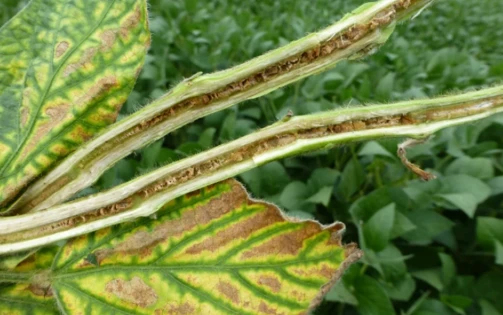
Brown stem rot is a common soybean disease in the north central U.S. that cuts yields up to 38% in severe cases.¹ It's one of three associated conditions to closely monitor - the others being soybean cyst nematode (SCN), which can compound yield harm from brown stem rot, and sudden death syndrome (SDS), with which brown stem rot shares key symptoms.
Here's how you can differentiate brown stem rot from other diseases and proactively manage crop health to protect your bottom line.
When to inspect brown stem rot in soybeans
Start scouting at about R5, when brown stem rot symptoms first appear.
Brown stem rot thrives when pods fill during cool and wet weather and conditions turn hot and dry by mid- to late August. It's caused by a fungus, Cadophora gregata, that lives in the soil and on crop residue.
The disease infects soybean roots then moves into the stem at vegetative and early reproductive stages.
Brown stem rot soybean symptoms
If you find it challenging to diagnose brown stem rot, you're not alone. It's often mistaken for an early maturing crop, sudden death syndrome, or the byproduct of dry soils or disease. Avoid the confusion by looking for these telltale signs.
Stem discoloration
Always start with a stem cross-section because some plants never show foliar symptoms. Cut several soybean stems lengthwise. If the pith appears chocolate-brown, especially along nodes close to the soil surface, you could have a brown stem rot problem.
Leaf problems
Look for yellow or brown tissue between leaf veins. This symptom typically emerges at R5 and peaks at R7, especially in lower-than-normal air temperatures. If the disease persists, leaves can wilt and curl, which can signal the highest levels of yield loss.
Differentiating brown stem rot from sudden death syndrome
Below-ground conditions can help you quickly distinguish brown stem rot from SDS.
Roots: Brown stem rot roots appear healthy, whereas those affected by SDS appear rotted.
Stem: Brown stem rot causes the pith of stems to turn brownish, whereas soybeans with SDS have pith that's white and appears healthy.
Brown stem rot and soybean cyst nematode
In addition to differentiating between brown stem rot and SDS, keep an eye out for soybean cyst nematode, which can compound the negative effects of brown stem rot by weakening the soybean plant.
How to manage brown stem rot in soybeans
You can take several proactive measures to mitigate the risk of brown stem rot.
Plant brown stem rot resistant varieties
Planting brown stem rot resistant varieties is the most effective management strategy. Rotate the BSR soybean varieties you plant to capitalize on resistance benefits and maturity advantages. For example, plants that mature earlier in the season might incur less yield damage than varieties that mature later.
Manage crop residue
Tillage can push old crop stubble beneath the soil, encouraging decomposition and limiting the risk of brown stem rot in soybeans.
Rotate soybeans with other crops
If brown stem rot is widespread in a field, avoid planting soybeans there for two to three years. In less severe cases, a corn-soybean or small grains-soybean rotation can help break the disease cycle.


