


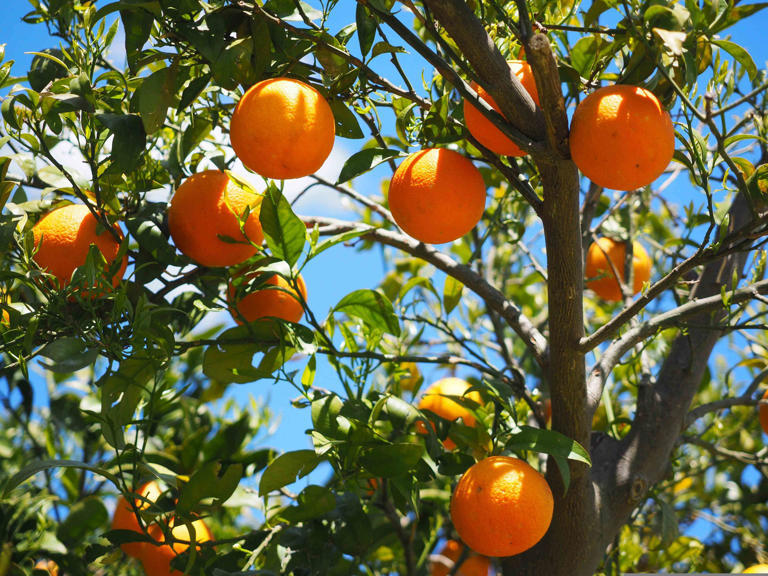
Ozgurdonmaz / Getty Images
To get a bumper crop of fruit on your citrus trees, you must provide fertilizer at the right times. These trees are heavy feeders that need more nutrients than they can get from the soil to produce the juicy fruit we love. Here's what you need to know about how and when to fertilize citrus trees either growing in the ground or in pots.
Meet Our Expert
Dr. Michael Polozola is an assistant professor of horticulture and the fruit and nut specialist for the Louisiana State University AgCenter.
When to Fertilize Citrus Trees
Most people want to know two things: When do you fertilize citrus trees, and how often do you fertilize them? For trees grown in the ground, follow these tips.
Fertilize Just After Harvest in Late Winter
Once the fruit is off the tree, it's time to give the plant a boost of food to restore nutrients it expended to make fruit.
"Generally you want to fertilize once between January and March, depending on where you are," Dr. Michael Polozola with the Louisiana State University AgCenter says. He recommends a balanced fertilizer like an 8-8-8 or a 13-13-13.
"At that point, the plant is not actively growing, and you want to fertilize so that the tree can take the nutrients up into its roots and have a spring flush of growth," Polozola says.
Fertilize Again in Early Summer
Polozola advises applying a second round of fertilizer between May and June. He recommends using a more nitrogen-rich fertilizer for the second feeding. This second round of fertilizer encourages the tree to set fruit.
"Use a lighter touch with the second round of fertilizer," Polozola says. "If you fertilize them too much, the trees will grow vegetatively at the expense of fruit growth."
Tips
Don't fertilize citrus trees after June. You'll decrease the plant's cold hardiness and delay the fruit from ripening.
How to Fertilize Citrus Trees
Increase the amount of fertilizer you put on the citrus tree each year, Polozola says. A bigger tree needs more nutrients as it grows.
For the first feeding in late winter: Polozola recommends using ½ pound of fertilizer the year you plant the citrus tree and increasing the fertilizer amount by a pound to a pound and a half each year. Cap the fertilizer amount in the tree's twelfth year, Polozola says. Trees 12 years or older should get 12 to 18 pounds of a balanced fertilizer like an 8-8-8 or a 12-12-12 for the late winter feeding.
For the second feeding in May or June: Apply a pound of nitrogen fertilizer the first year the plant is of fruit-bearing age and increase by ¼ pound each year. Cap the amount when the tree hits 12 years of age.
Broadcast the fertilizer on the ground under the canopy of the tree. Avoid the area near the trunk and put the fertilizer in a 12- to 18-inch-wide band on the ground that circles the tree and ends at the edge of the tree's canopy. Lightly scratch the fertilizer into the surface of the soil with a leaf rake, then water well.
Related: The 7 Best Fertilizer Spreaders
Don't forget micronutrients. Micronutrients are trace elements like calcium, magnesium, sulfur, and iron that a fruit tree needs to thrive. "Micronutrient deficiency is rare, but you should be adding a fertilizer with micros in it at least every other year," Polozola says. Fertilizer blended for citrus contains micronutrients, as do many liquid all-purpose fertilizers and slow-release fertilizers.
Add mulch. Organic mulches such as bark chips or pine straw add nutrients to the soil as they break down. In addition to boosting available nutrients in the soil, "mulching and organic matter are going to increase the nutrient retention for your soil," Polozola says. Apply the mulch in spring in a 2- to 3-inch layer that extends out to the edge of the tree's canopy. Make sure the mulch doesn't touch the trunk at all.
Fertilizing Potted Citrus Trees
Potted citrus trees have different fertilizer needs than trees planted in the ground because nutrients are washed out of a container faster than they are in the ground. A potted citrus tree needs to be fertilized more often.
"For citrus in a container, I fertilize more often and with weaker fertilizer," Polozola says. He recommends a slow-release fertilizer in granular form that provides a constant stream of nutrients over time. Polozola recommends replenishing the fertilizer for a potted citrus three to four times a year. Always follow package directions to avoid over-fertilizing, which can burn the roots.
Tips
When growing potted citrus trees, look for citrus varieties grafted onto dwarf or semi-dwarf root stock so the tree stays small and doesn't need to be pruned or re-potted as often.
Related: These 7 Fruit Trees Are the Most Challenging to Grow-But Totally Worth It
Read the original article on Better Homes & Gardens


