


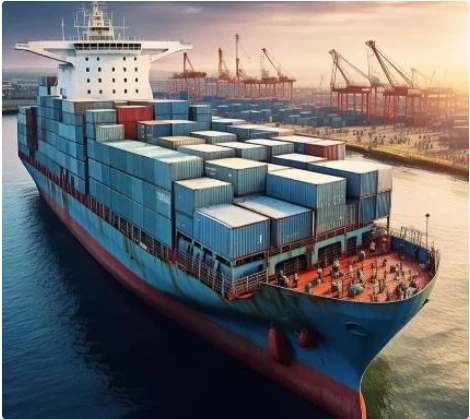
According to reports, the first batch of Lao potassium fertilizer goods transported via the Pinglu Canal arrived at Qinzhou Port, marking the official opening of a new cross-border trade channel for potassium fertilizer connecting Southeast Asia and China.
The total volume of this first shipment is 3,012 tons of standard potassium chloride (SMOP). This batch of potassium fertilizer was shipped from Laos, first transported to Vietnam's Vung Ang Port, then arrived at Qinzhou Port in Guangxi by sea. The entire transportation was jointly organized and undertaken by Guangxi Pinglu Canal Foreign Trade Supply Chain Co., Ltd. and Sinotrans Guangxi Co., Ltd.
Fertilizer industry traders stated that the geographical advantages of the Pinglu Canal have changed the original logistics pattern. Previously, cargo ships needed to detour through the waters of the Pearl River Delta in Zhuhai. The new channel greatly simplifies the route for Lao potassium fertilizer to be transported into China via Vietnam. Compared with traditional transportation routes, this route is shortened by nearly 500 kilometers, and the transportation time can be saved by 5 to 7 days. At the same time, it reduces multiple transshipments and loading and unloading, reducing the loss and logistics costs of bulk agricultural means of production transportation.
The Pinglu Canal was officially opened to navigation on September 16, and is positioned as a major river-sea transportation corridor connecting Southwest China to Southeast Asia. Southwest China is an important agricultural and economic region in China. After the new channel is put into use, Lao potassium fertilizer can be more efficiently supplied to the southwest fertilizer production bases, stabilizing the domestic supply capacity of potassium fertilizer raw materials.
Industry analysts said that this channel will be beneficial to Lao potassium ore resources' export to China in the long run, while facilitating the two-way circulation of agricultural means of production, industrial products in Southwest China and bulk commodities in Southeast Asia, and improving the China-ASEAN bulk raw material supply chain network.


